Piney Woods Crossroads Community
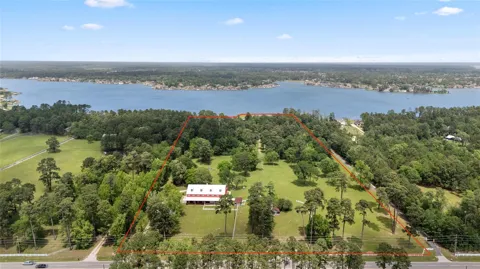
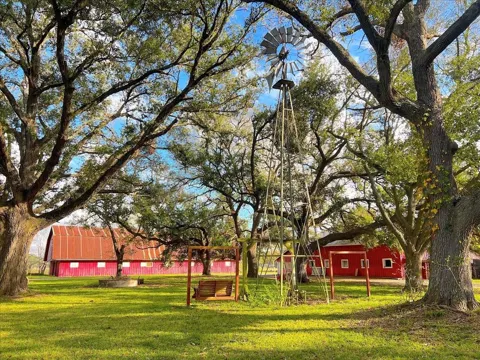
Welcome to Moscow, a historic East Texas crossroads in Polk County's Piney Woods, once the largest town in the county.
Moscow is an unincorporated community in Polk County, Texas, set in the Piney Woods of East Texas at the junction of U.S. Highway 59 and Farm Road 350, just west of the county seat of Livingston. Its name is one of the more surprising on the Texas map: the settlement was first known as Greenville when David and Matilda Green arrived in the 1840s, but postal authorities found that name too close to other Texas towns, and in 1853 it was renamed Moscow, after the city in Russia. For a time, Moscow was a place of real consequence. It incorporated in 1856 and grew into a trading center for farmers and a stage stop on the Liberty-Nacogdoches Road. The Houston East and West Texas Railway arrived in the late nineteenth century, and sawmills, a cannery, and a column factory supported a logging economy that made Moscow, with about 228 residents in 1880, the largest town in Polk County. Its population peaked near 263 around 1900. The lumber boom did not last. As the region's timber was cut over, the mills declined, and Moscow settled into a quiet rural crossroads. Its population has held around 170 for decades, and the community today is a small cluster of homes and farmland surrounded by forest. Its location on U.S. Highway 59 keeps it connected to Livingston and the wider East Texas region, while nearby Lake Livingston and the Sam Houston National Forest anchor the surrounding recreation. For those drawn to the Piney Woods' unhurried countryside and its layered history, Moscow is a distinctive, low-density setting.
Moscow is located in Polk County, Texas, in the Piney Woods region of East Texas. It sits at the junction of U.S. Highway 59 and Farm Road 350, west of the county seat of Livingston.
Moscow was first settled in the 1840s and called Greenville, but postal authorities considered that name too similar to other Texas towns. In 1853 it was renamed Moscow, after the city of Moscow, Russia, and it incorporated in 1856.
Moscow was once the largest town in Polk County, with about 228 residents in 1880 and a peak near 263 by 1900. It was a sawmill and trading center served by the Houston East and West Texas Railway before the lumber industry declined.
Moscow lies within the Corrigan-Camden Independent School District, a rural Polk County district serving the western portion of the county. Students from the area attend district campuses in and around Corrigan.
City Guide
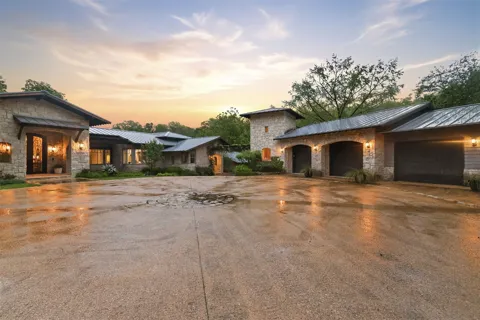
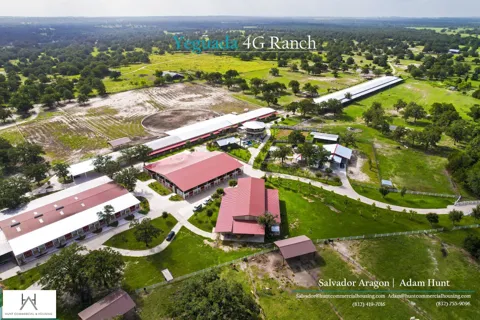
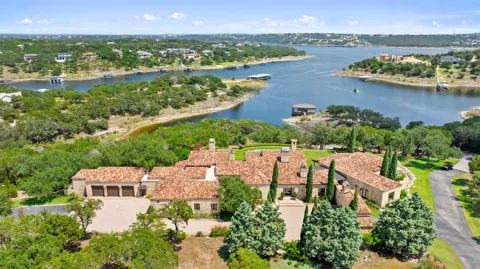
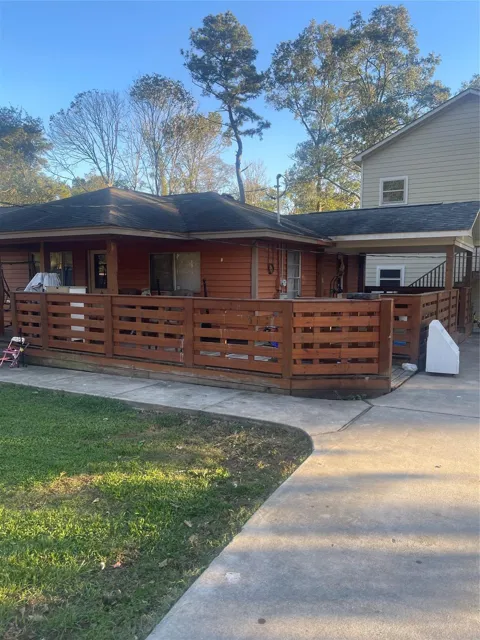
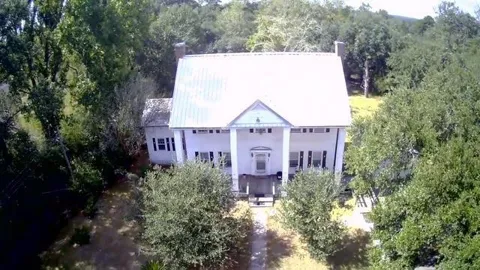
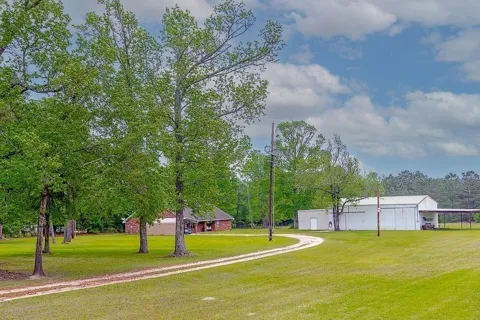
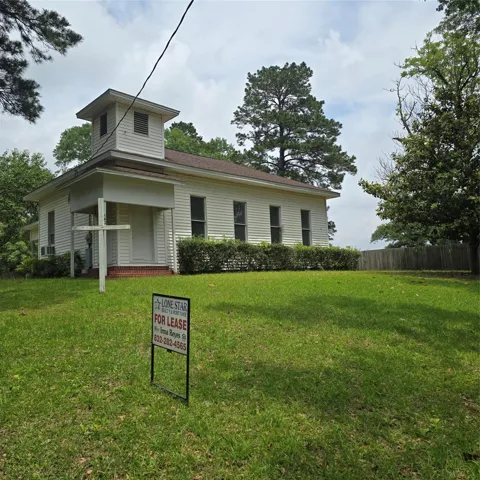
Moscow's housing stock reflects its evolution from a railroad-era town to a rural crossroads. Homes are a mix of older residences tied to the community's nineteenth-century core and newer single-family and country properties on larger wooded parcels. There is no subdivision-scale development; instead, houses are spread along the U.S. Highway 59 and Farm Road 350 corridors and into the surrounding timberland. This keeps the market low-density and rural, suited to buyers who want acreage, privacy, and forested East Texas surroundings rather than a conventional town.
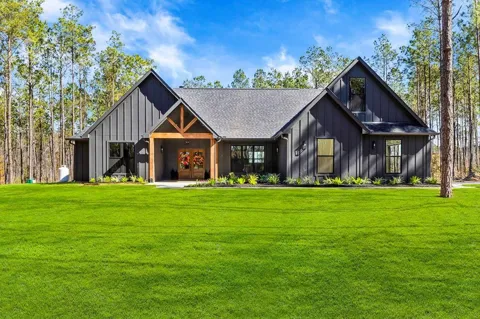
Moscow has no formal neighborhoods; it is a small cluster of homes and rural properties near the junction of U.S. Highway 59 and Farm Road 350, with forest and pastureland beginning almost immediately beyond the crossroads. The community's compact historic core gives way to scattered country homes across the surrounding Piney Woods. This loose, spread-out layout is typical of East Texas communities that grew around a rail stop and later quieted, and it gives Moscow a distinctly open, rural feel.
Life in Moscow is quiet and rural, tied to the rhythms of the Piney Woods. The community is small and self-contained, with most shopping, dining, and services a short drive away in Livingston, the Polk County seat. Residents value the space, the forested landscape, and the low cost of rural East Texas living. Lake Livingston and the Sam Houston National Forest put boating, fishing, and hunting within easy reach, and the pace is deliberately unhurried—a marked contrast to the sawmill bustle that once defined the town.
Moscow lies within the Corrigan-Camden Independent School District, a rural Polk County district that serves the western portion of the county. Students from the Moscow area attend district campuses in Corrigan and the surrounding countryside, connecting the community to a small, locally governed school system. Livingston ISD, the county's largest district, serves the county seat nearby, but Moscow's households are part of the Corrigan-Camden district rather than the Livingston system.
Moscow sits at the junction of U.S. Highway 59, the main north-south route through Polk County, and Farm Road 350. U.S. 59 connects the community to Livingston, the county seat, just east, and to Lufkin and the broader East Texas highway network beyond. The highway gives Moscow dependable access to regional services and employment, even as the community itself remains low-traffic and rural. Most local travel is by car along these two-lane and four-lane corridors.
Moscow's recreation comes from its East Texas setting. Lake Livingston, one of the state's largest reservoirs, lies nearby and offers boating, fishing, and lakeside parks along the Trinity River basin. The Sam Houston National Forest, to the southwest, provides hiking, camping, and hunting across its pine and hardwood woodlands. Within the community, the surrounding forest and open land support rural pastimes, and the historic remnants of the town's rail-era past add a layer of local interest for residents and visitors alike.
MARKET SNAPSHOT
How homes have been selling here over the last 90 days.
Market data reflects closed sales over the last 90 days and is provided for informational purposes.
For sale
Handpicked properties hitting the scene in your area.
For sale
Handpicked properties hitting the scene in your area.
For sale
Handpicked properties hitting the scene in your area.
BROWSE BY ZIP
Browse listings by postal code in this area.
8637 Fredericksburg Rd, Suite 400-117 San Antonio, TX 78240